We use cookies on our website.
Some of them are necessary for the functioning of the site, but you can decide about others.


Sultan Sandur is a Punjabi Canadian writer, content strategist and communications professional based in Toronto. His work spans travel, hospitality, culture and digital media. He is the founder of @JustSultanTO, an independent travel and lifestyle platform. His writing focuses on luxury travel, destination identity and the evolving hospitality and tourism landscape.
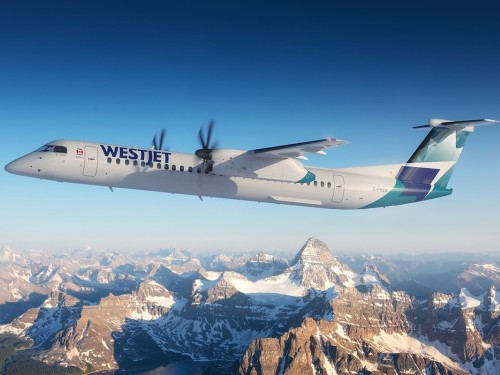
WestJet is urging Ottawa to develop a national aviation strategy, warning that rising fuel costs, regulatory pressures and federal financing for competing airlines are putting further strain on Canada’s aviation industry.
Speaking at the Calgary Chamber of Commerce on Thursday (Oct. 29), WestJet CEO Alexis von Hoensbroech said higher jet fuel prices are exposing longstanding weaknesses in an industry already facing substantial operating costs and thin margins.
“That is why the fuel story is not only about fuel. Fuel is bringing to light what was already there: Canada’s aviation system has very few shock absorbers left,” von Hoensbroech said.
In a statement issued Thursday, the Calgary-based carrier argued that airport charges, air-navigation fees, passenger-protection obligations and taxes have left airlines with limited financial flexibility.
Higher fuel prices add to those expenses without generating additional ticket sales. According to WestJet, airlines can recover only part of the increases through fares, leaving already narrow margins to absorb the remaining costs.
Beyond fuel prices and operating expenses, WestJet is also challenging federal financing for competing airlines, arguing that government intervention has distorted competition.
The airline maintains that direct government financing has altered competitive conditions, allowing some carriers to offer fares that WestJet characterizes as supported by public funding while others finance their operations independently.
WestJet did not identify the carriers, financing arrangements or specific fares it was referring to in its release.
“We fundamentally believe that governments should not intervene in markets if they want a healthy and competitive industry,” von Hoensbroech said.
The carrier pointed to its three decades of commercially funded growth and said it absorbed pandemic-era losses without government funding.
WestJet also raised concerns about the broader cost of operating an airline in Canada compared with the United States.
The airline cited figures ranking Canada 105th out of 119 countries for aviation cost competitiveness, although its release did not identify the source or methodology.
Among the differences highlighted were airport improvement fees, which WestJet said are often $40 in Canada, compared with a US$4.50 cap on passenger facility charges in the United States.
WestJet also pointed to Canada’s user-funded air-navigation system, contrasting it with what the airline described as a government-subsidized model in the U.S.
Passenger-rights costs, emissions-offset requirements and taxes add to the financial burden, according to the carrier.
WestJet also cited repeated labour disruptions in Canada as an operating challenge. The airline claimed the United States has not experienced an airline labour disruption in decades, despite having some of the industry’s best-paid airline workers.
The carrier further contrasted the two countries’ pandemic responses, describing Canadian government support for airlines as minimal compared with assistance provided in the United States.
Taken together, WestJet argues, these costs and operating pressures limit the industry’s ability to absorb fuel-price increases, maintain affordable fares and invest in connectivity.
“We are asking Canada to be bold and strategic in developing a National Aviation Strategy that advances the essential nature of aviation and leads to a competitive, affordable and healthy airline industry,” von Hoensbroech said.
While calling for changes at the national level, von Hoensbroech pointed to Calgary as an example of how cooperation among airlines, governments, airports and businesses can support aviation growth.
WestJet now serves more than 100 nonstop destinations from Calgary, nearly twice its pre-pandemic total, according to the airline.
In October 2022, WestJet signed a memorandum of understanding with the Government of Alberta, committing to make Calgary its sole global connecting hub, base its widebody fleet in the city and expand routes and capacity.
The agreement also included commitments from government, airport and business partners to support that expansion.
WestJet said the collaboration helped attract a Lufthansa Technik engine repair facility backed by a 15-year, multibillion-dollar contract, along with a 126,000-square-foot CAE training Centre of Excellence with eight full-flight simulators and cabin trainers.
“Calgary didn’t get here by changing one policy. We got here by dreaming big together and lining up every decision behind that goal. Canada can do the same,” von Hoensbroech said.
Don't miss a single travel story: subscribe to PAX today! Click here to follow PAX on Facebook.